ENGINE FUEL SYSTEMS/JET ENGINE (UNIT 1)
PISTON ENGINE:
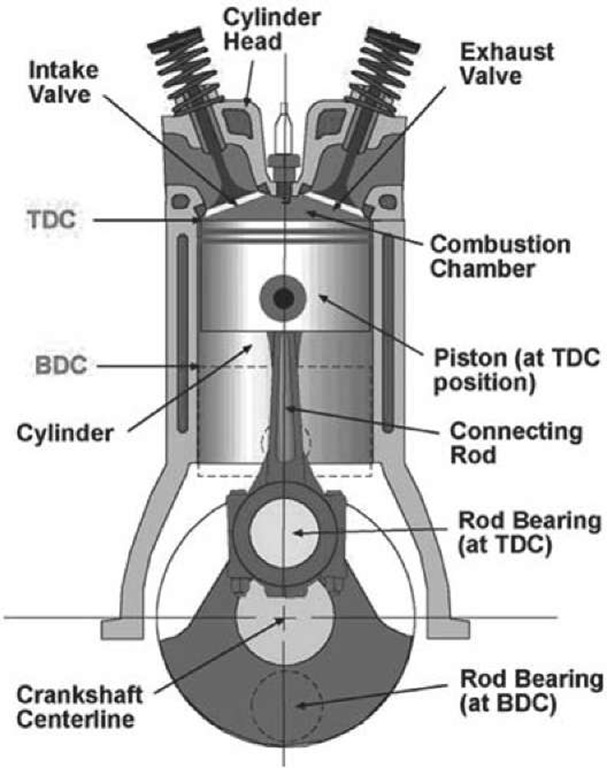
A reciprocating engine, also often known as a piston engine, is typically a heat engine (although there are also pneumatic and hydraulic reciprocating engines) that uses one or more reciprocating pistons to convert pressure into a rotating motion. This article describes the common features of all types. The main types are: the internal combustion engine, used extensively in motor vehicles; the steam engine, the mainstay of the Industrial Revolution; and the niche application Stirling engine. Internal combustion engines are further classified in two ways: either a spark-ignition (SI) engine, where the spark plug initiates the combustion; or a compression-ignition (CI) engine, where the air within the cylinder is compressed, thus heating it, so that the heated air ignites fuel that is injected then or earlier.


FUEL INJECTION SYSTEM TYPES:
https://www.experimentalaircraft.info/articles/aircraft-engine-fuel-injection.php
A reciprocating engine, also often known as a piston engine, is typically a heat engine (although there are also pneumatic and hydraulic reciprocating engines) that uses one or more reciprocating pistons to convert pressure into a rotating motion. This article describes the common features of all types. The main types are: the internal combustion engine, used extensively in motor vehicles; the steam engine, the mainstay of the Industrial Revolution; and the niche application Stirling engine. Internal combustion engines are further classified in two ways: either a spark-ignition (SI) engine, where the spark plug initiates the combustion; or a compression-ignition (CI) engine, where the air within the cylinder is compressed, thus heating it, so that the heated air ignites fuel that is injected then or earlier.
PISTON ENGINE CARBURATOR
A carburetor (American English) or carburettor (British English) is a device that mixes air and fuel for internal combustion engines in the proper air–fuel ratio for combustion.
CARBURATOR TYPES:
Aircraft carburetors are separated into two categories: float- type carburetors and pressure-type carburetors.
FLOAT TYPE CARBURATOR:
A float-type carburetor consists essentially of six subsystems that control the quantity of fuel discharged in relation to the flow of air delivered to the engine cylinders. These systems work together to provide the engine with the correct fuel flow during all engine operating ranges.
The essential subsystems of a float-type carburetor are illustrated in Figure 1. These systems are:
- Float chamber mechanism system
- Main metering system
- Idling system
- Mixture control system
- Accelerating system
- Economizer system
PRESSURE TYPE CARBURATOR:
A pressure carburetor is a type of fuel metering system manufactured by the Bendix Corporation for piston aircraft engines, starting in the 1940s. It is recognized as an early type of throttle-body fuel injection and was developed to prevent fuel starvation during inverted flight.
PISTON ENGINE PRINCIPLE
CONSTRUCTION:
ICING:
HEATING:
FUEL INJECTION SYSTEM:
The purpose of the fuel injection system is to deliver fuel into the engine cylinders, while precisely controlling the injection timing, fuel atomization, and other parameters. The main types of injection systems include pump-line-nozzle, unit injector, and common rail.
INJECTOR:
FUEL INJECTION SYSTEM (principle and construction)
FUEL INJECTION:
https://www.experimentalaircraft.info/articles/aircraft-engine-fuel-injection.php
JET ENGINE
JET ENGINE OPERATION CONTROL:
FUEL METERING SYSTEM:
ELECTRONIC ENGINE CONTROL(FADEC):
A full authority digital engine (or electronics) control (FADEC) is a system consisting of a digital computer, called an "electronic engine controller" (EEC) or "engine control unit" (ECU), and its related accessories that control all aspects of aircraft engine performance. FADECs have been produced for both piston engines and jet engines.
also can refer:
SYSTEM LAYOUT AND COMPONENTS:
ALSO
THANK YOU>>>>>>>>>>>>>>>>>>>>>>>>>>>>>>>>>>>>>>>>>>>>>>>>>>>>>>>>>
Comments
Post a Comment